What It Is:
On Friday December 2nd, 2016, Asha for Education Pittsburgh Chapter hosted an event called Evening for Hope. This event was held on-campus and brought together many undergraduate students from the University of Pittsburgh to participate in a hunger banquet. A hunger banquet is a live simulation with a group of people in order to highlight disparities of income, food, and educational resources certain low socio-economic people face in real life. Since our organization focuses on the awareness of children’s educational disparities in India, the focus of the simulation was specifically on Indian families with different incomes.
How It Works:
The night started with groups of friends entering the event and sitting at random tables in a banquet hall. The tables were divided by three different type of incomes: low income, middle income, and high income. On the table were pieces of paper that described the lives of typical families in each income bracket around the world. For example, low income families could be characterized by “small plots of land” that grew only one type of crop for sustenance and children who, right after school each day, had to come help the parents with the harvest. These children were familiar with the chronic pressures of juggling school and planting for harvest season. Climbing up the social ladder, middle income families were characterized a little bit differently. For example, middle income families could include autorickshaw drivers who make just enough money to afford an apartment flat in India or over-worked nurses who are trying to put their children through school so these children can grow up to be doctors, engineers, businessmen,etc. Climbing even further up the social ladder to the high income families, the stakes are very different. High income families are characterized by entities such as 6-bedroom apartments and expensive diets; however, high income families also donate older clothing and necessities to shelters in need of these items.
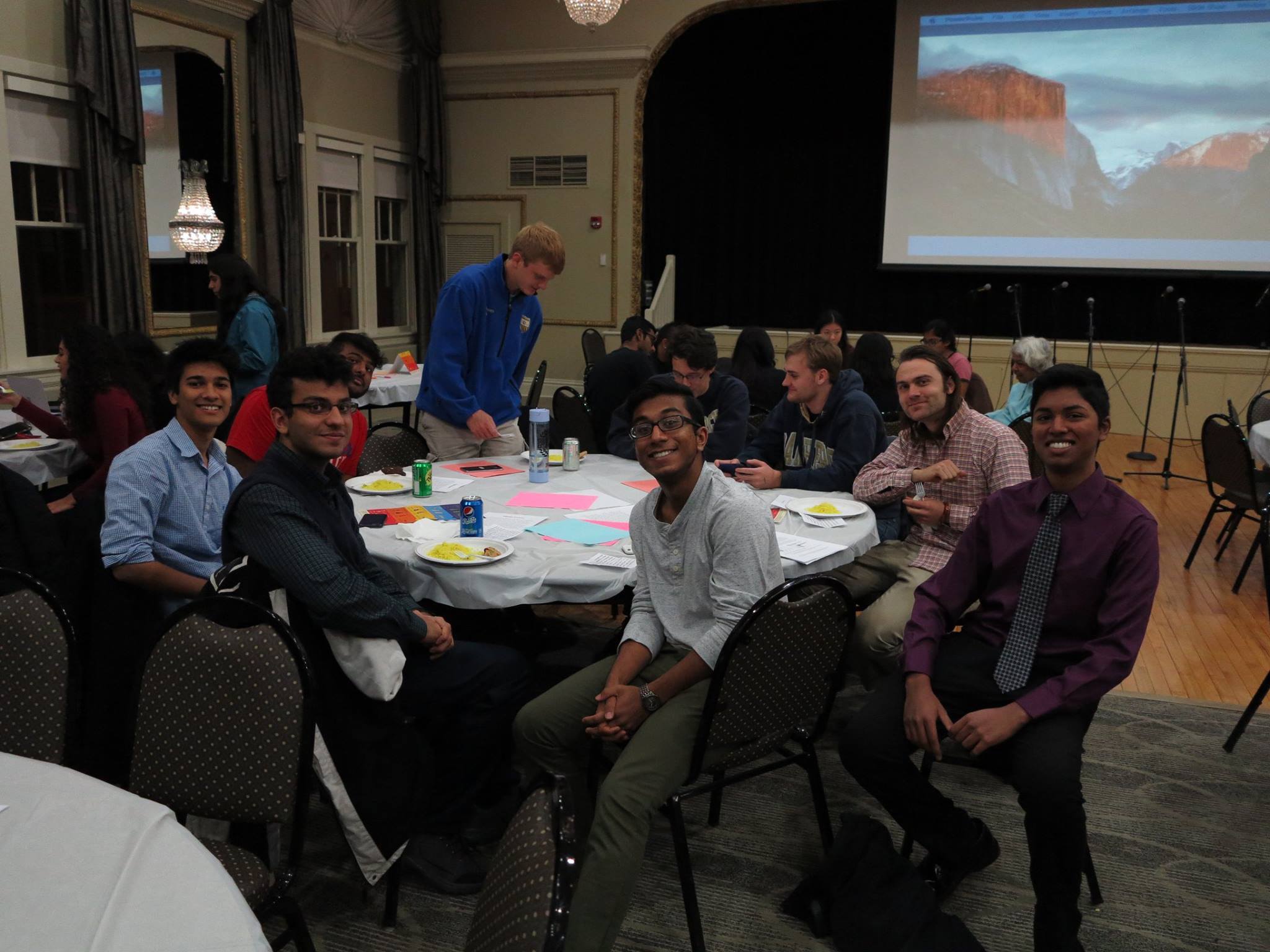
Each table had a randomized number of low, middle, and high income so everyone was grouped together at one table. Also at each table were other pamphlets and fact-sheets concerning hunger banquets that people could view if they wanted during the simulation. Soon after everyone settled down in seats, Asha Pittsburgh’s E-Board started a brief presentation explaining some of the startling hunger and educational access statistics in India. We explained that many children under the age of five who experience chronic hunger become intellectually and emotionally stunted not just in India, but around the world as well. We also explained to people who were unknowledgable about Asha for Education, the organization’s missions and values and how our student organization accomplishes that on a smaller, more university scale.
Also found on participants’ tables were brightly colored construction papers, envelopes, and markers. These supplies allowed participants to write letters for our PenPals Initiative which we launched in the Fall. See Asha’s blog post on: PenPal Initiative for more details concerning this.
The Outcome:
After the presentation, the Hunger portion of the Banquet commenced. Since each person was randomized by low, middle, or high income family, participants were told to go get food when called by income. Low income people received yellow rice, a drink, and a cookie. Middle-income people received yellow rice rice, a drink, a cookie, and chaat. High-income people received yellow rice, a drink, a cookie, chaat, and half of a Chipotle vegetarian burrito. Intuitively, the higher income a person was, the more food they received.
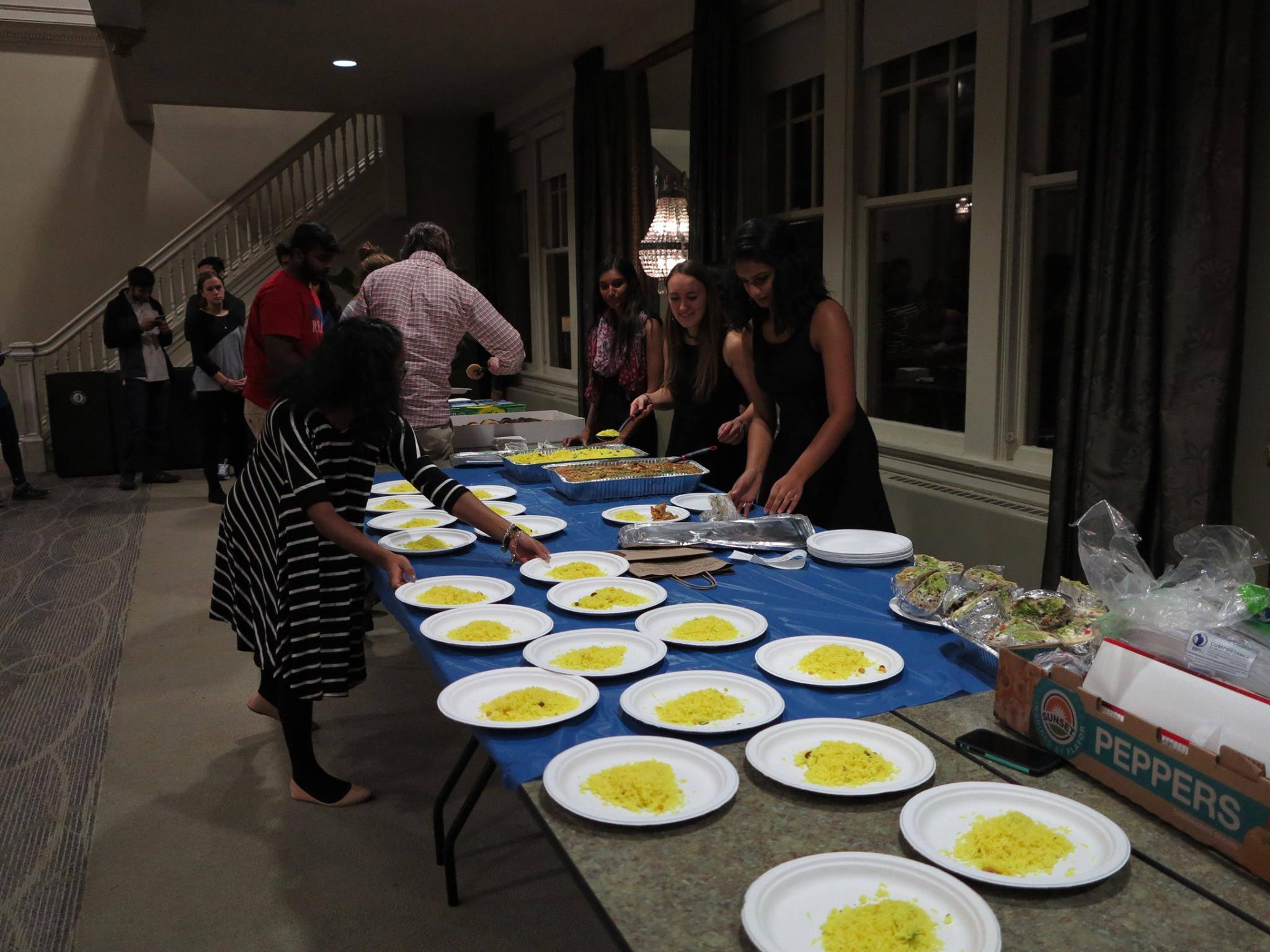
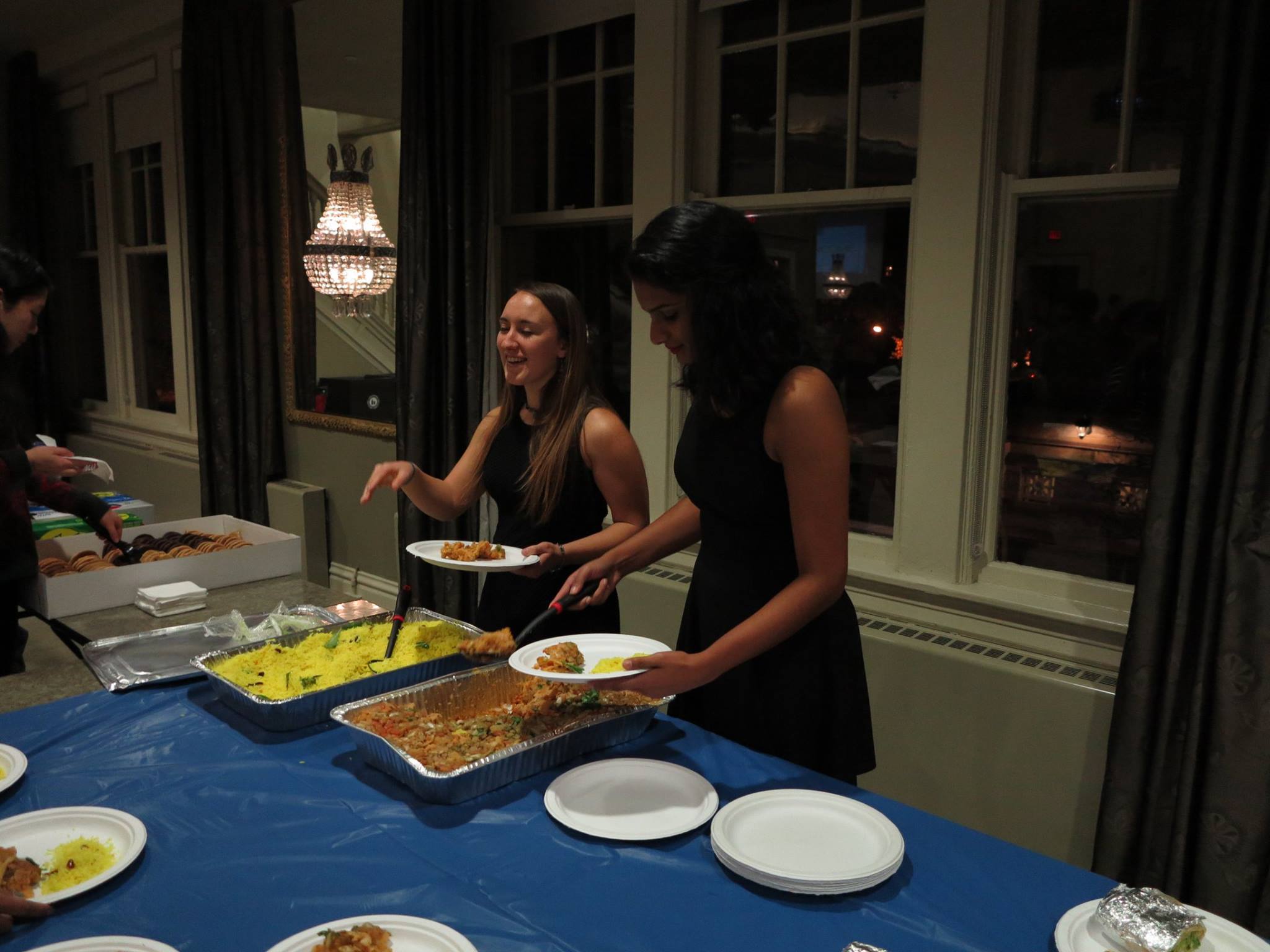
It was fascinating to see the disparities just by the look of people’s food plates. In a random group of 5 friends at a table, 1 person may be high income, 2 people middle income, and 3 people low income. The low income people were upset that they did not get as much food as the middle and high income people. The middle income people were upset that they did not get as much food as the high income people. The high income people triumphed at first, happy that they were receiving the most food, but some soon reported feeling bad that they had more food than their lower income friends. I, among other board members, witnessed high income people giving low income people their food because they were still hungry.
On just a small scale, we saw the effects of income, hunger, and division. People’s emotions seemed to run high when they did not get the right amount of food for meal sustenance and saw other people around them get more food than them. We learned how it is difficult for people with lower incomes to have access to not only food but also education as well.
There were also performances by University of Pittsburgh cultural student organizations such as Pitt Avaaz, a South Asian Acapella team, and the African Drumming Ensemble who performed an interactive dance with audience members.
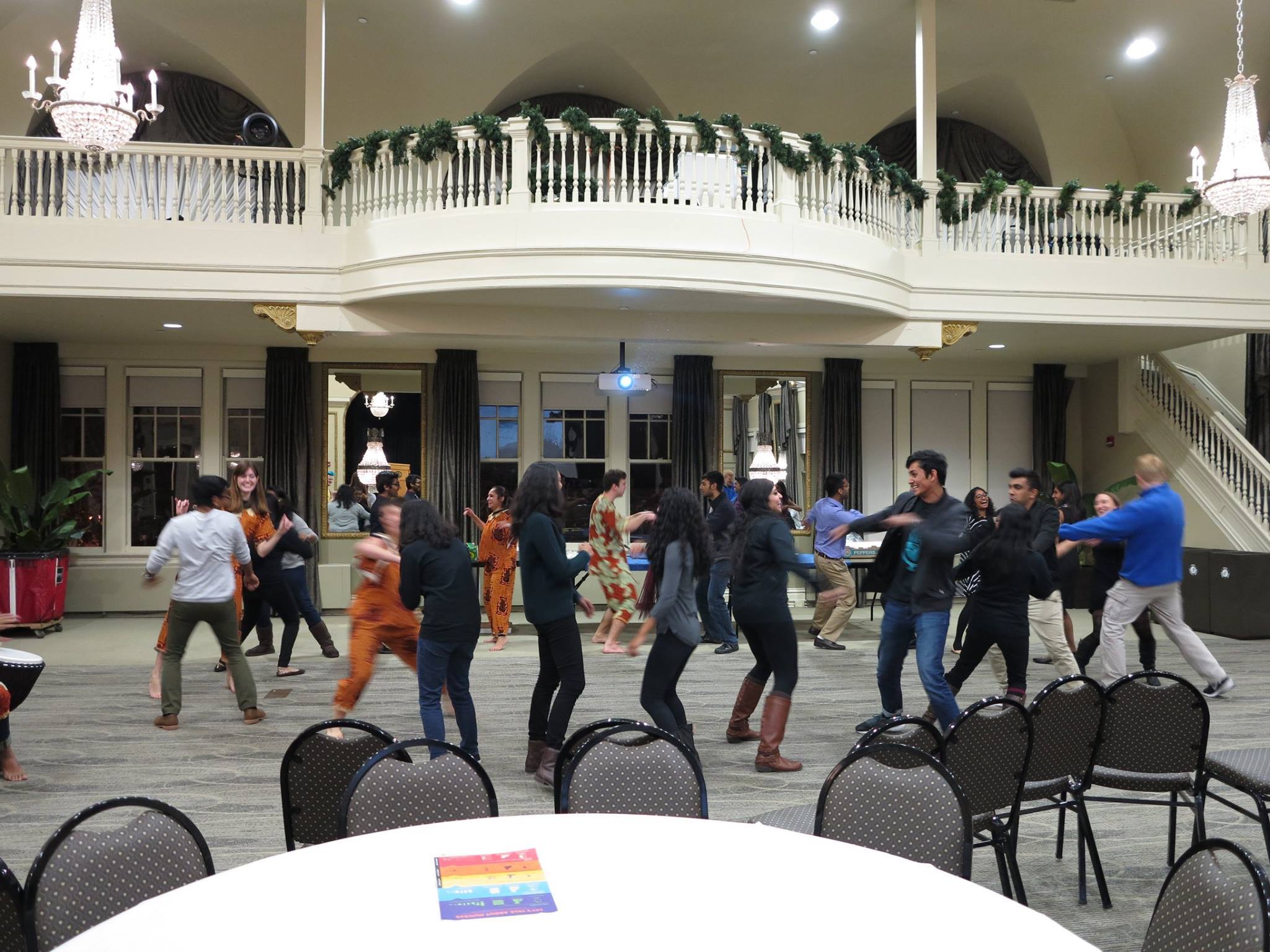
Overall, the event was a success. People came out for good food, but also learned what it feels like to walk in the shoes of different income families in around the world. There is asha (hope) that our organization can continue to raise awareness of these issues in the future.
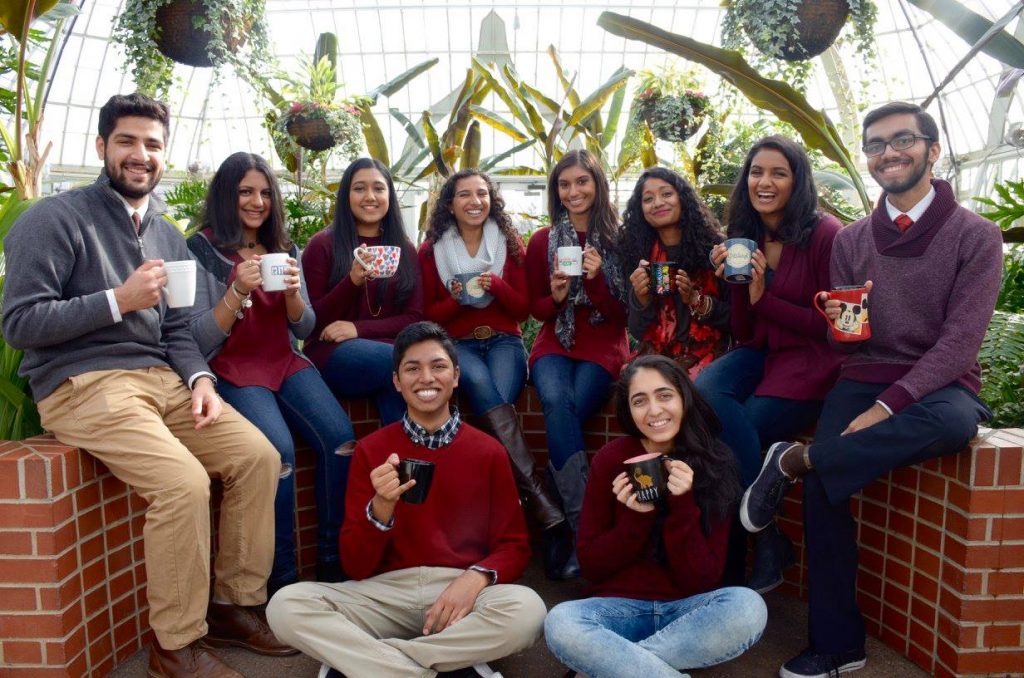
Here is a updated picture of board from our Christmas Photo Shoot. Sweaters and mugs was the theme!